Campaign context beats a prompt library.
A prompt helps one task. Campaign context connects decisions, evidence, offer, output, approval, and results. That relationship is what makes the product more useful each week.
FIELD NOTES
Not thought leadership from a distance. These are notes on workflow, output quality, and how small teams earn real leverage.

LATESTCAMPAIGN
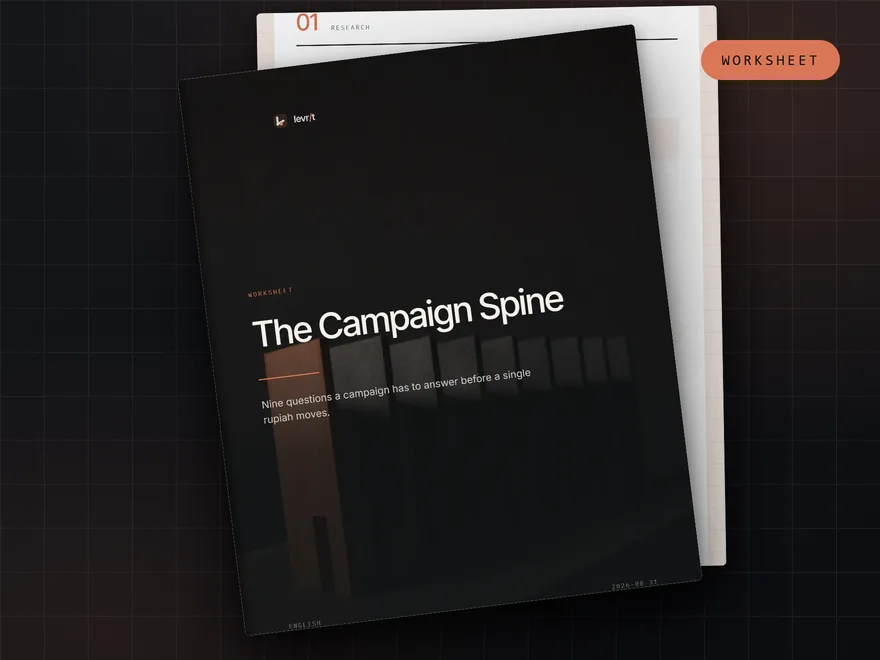
Most campaigns do not fail on execution. They fail because a stage was never answered, and nobody noticed until the money was spent.
NURIL/2026-08-31/3 MIN
CREATIVE
Why AI campaign copy all sounds the same
Not because the model is not good enough. Because nobody decided what kind of idea to have, so it reaches for the same device every time.
2026-08-31/3 MIN
TOOLS
A general AI agent or a Campaign HQ: when to use which
This week we spent a night inside a general AI agent that had just raised a large round. It made a good client report fast. What it did not do is the thing that keeps an agency trusted.
2026-09-09/3 MIN
A prompt helps one task. Campaign context connects decisions, evidence, offer, output, approval, and results. That relationship is what makes the product more useful each week.
The interface, errors, number formats, and deliverables must feel written for Indonesian marketers. Product language is part of design, not a final layer.
Teams do not buy chat answers. They need landing pages, sequences, briefs, creative, and reports they can edit, approve, and hand off.
Verified work takes time, and a full report can take minutes. What makes a product feel broken is not the slowness — it is the silence. So every long run in Levrit now says what time is doing: still working, this many seconds, and this is normal. The clock is honest; it only measures time that actually passes.
A product without a wall of client logos still holds one proof that cannot be faked: work that actually shipped. That is why the What's New page exists. Every entry is dated by the day the work landed, not the day it was announced. No roadmap, no promises — only what you can already use.
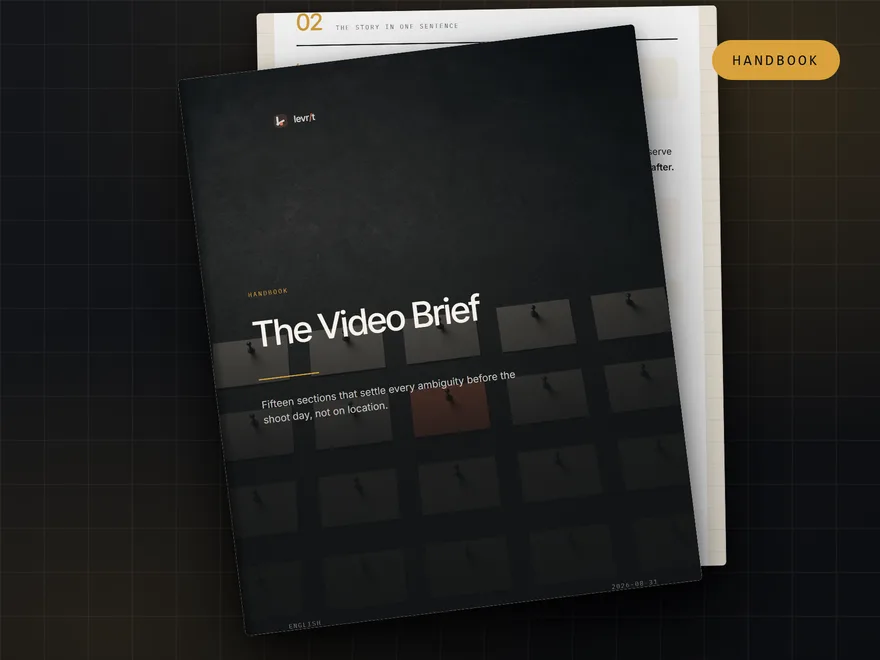
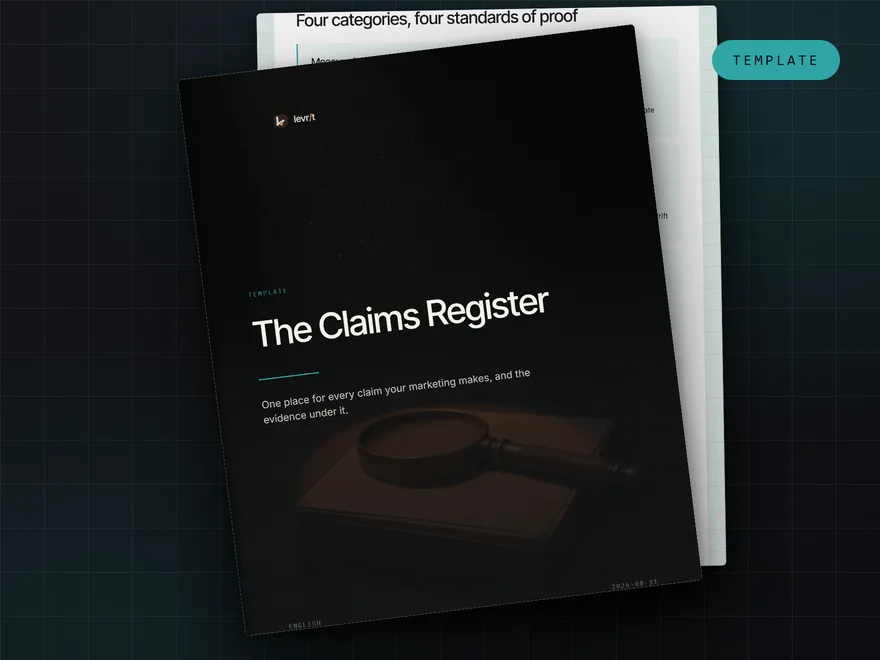
Worksheets, templates and short books out of the same work. Free, and each one says who it is not for.